March 2026
A Distinctive Identity Through Unique Methods
Often invisible yet utterly essential, joints give our furniture its structural strength, longevity and, in many pieces, a distinctive look and character. Selecting the correct joint for each structural connection is a vital part of how our furniture is both designed and constructed.
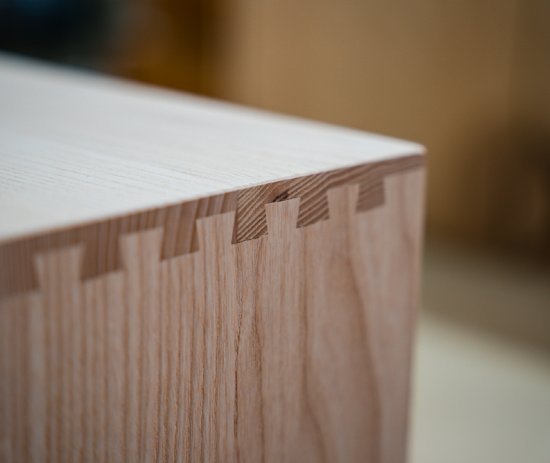
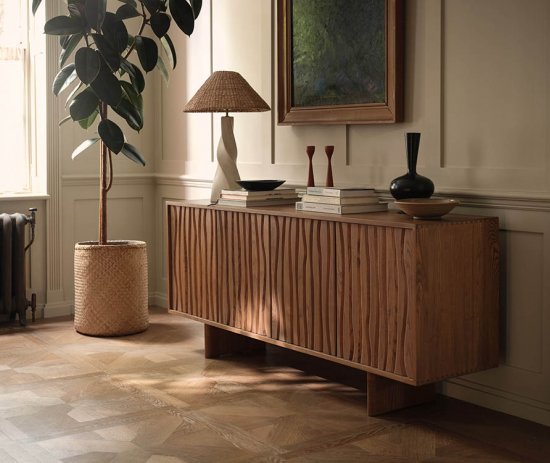
Dovetail joints on an Assendon Large Sideboard
When we look at a piece of furniture, the eye is naturally drawn to the large surfaces, the curved and decorative elements, the grain and the colours in the wood itself. But much of the real skill, craft and magic of furniture design and making lies in the often invisible but vital parts that hold it all together: the joints.
Joints are structurally critical because wood is strongest along the grain and significantly weaker across it or at the ends. Wherever two pieces of timber meet, there is a potential point of weakness, which carefully chosen joinery is designed to control and strengthen.
Good furniture lasts because its joints are engineered to resist the specific forces acting upon each piece. Chairs, for example, must withstand both direct downward load and the torsional stresses created when someone shifts their weight or moves the chair itself. Rails are subject to shear forces under load. Plus, the timber must also accommodate its own natural movement, as it expands and contracts with changes in humidity. So, our furniture’s strength lies not just in the timber we use, but in the integrity of its joints, each chosen to meet specific demands.
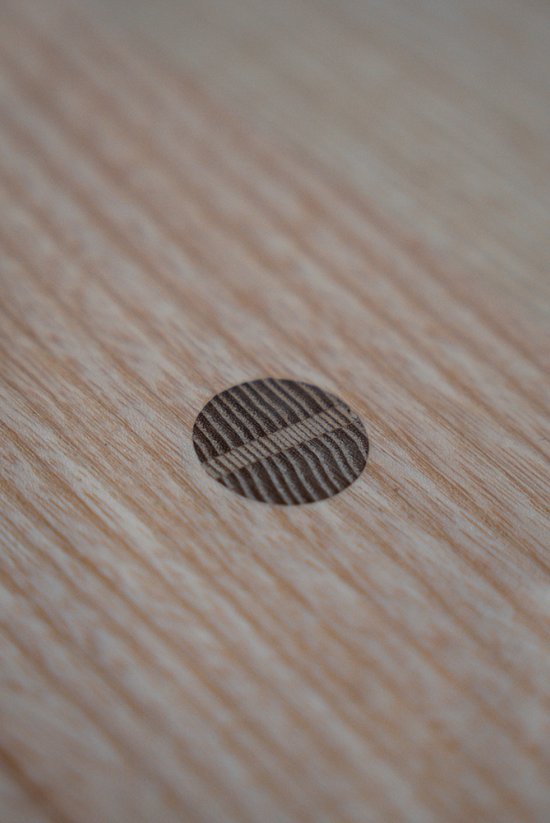

The wedge joint on the Stack Chairs in a variety of finishes
We identify those demands at the start of the design process. From the initial concept, our technical designers make a prototype, in which they decide which joints to use and where to give the piece its strength and integrity. For example, the shape and size of the joint where a leg goes into the bearer is crucial to ensuring a table is solid and stable. Acting as a bridge between the design studio and the factory, they then work with their colleague, Steve, who creates the prototypes, to determine how the piece can be physically machined and assembled.
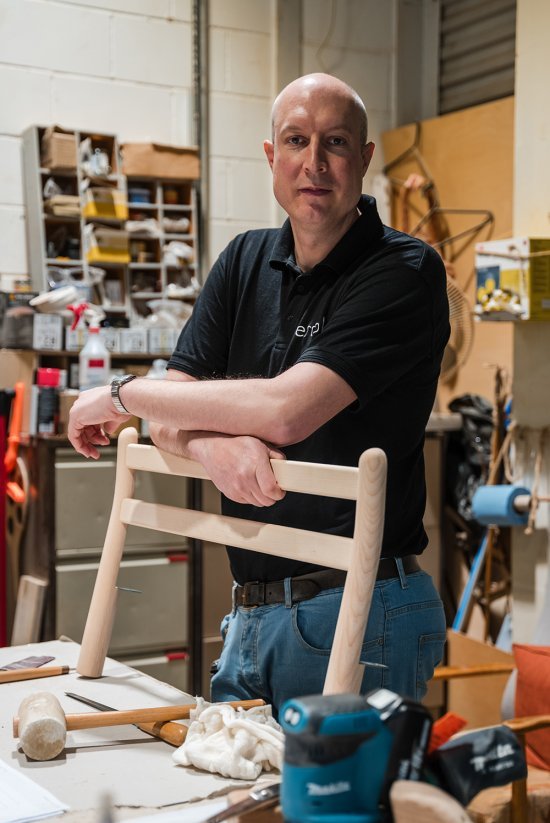
Steve has created prototypes at ercol for 25 years
As you might expect, we take an essentially traditional approach to jointing, on the basis that proven, time-honoured joints like mortises and tenons are proven and time-honoured for good reason. How we make them, though, has evolved. In the past, they were cut square, originally by hand and later using a machine that combines a drill bit and a chisel. That’s difficult to reproduce on a CNC machine, so now we use round or oval tenons and mortices, which are just as strong but much easier to cut.
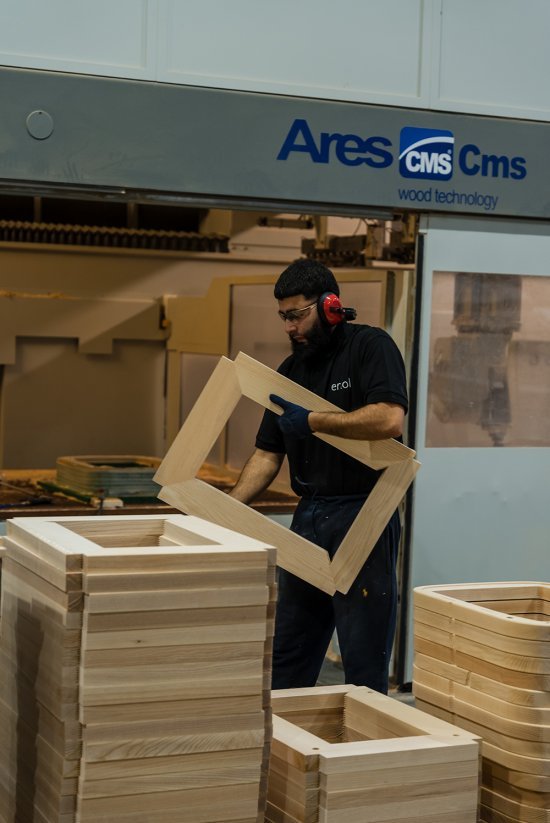
The Ares machine frees the operator to focus on quality process or perform secondary operations on parts being machined
CNC machines allow us to make our joints accurately and consistently. They also enable us to combine multiple processes on one machine, making production faster and more efficient. As the chair leg is turned, the tenon is formed at the same time — a precise process that creates both parts in a single operation.
Sometimes, we introduce new joints for specific applications. On a door with a mitred corner, where the horizontal and vertical pieces form a 45-degree angle, it will be fixed with a comb joint hidden inside. This is a development from the previously used, traditional bridle joint, which is similar to a mortise and tenon but is cut right through the end of the timber, rather than forming a hole.
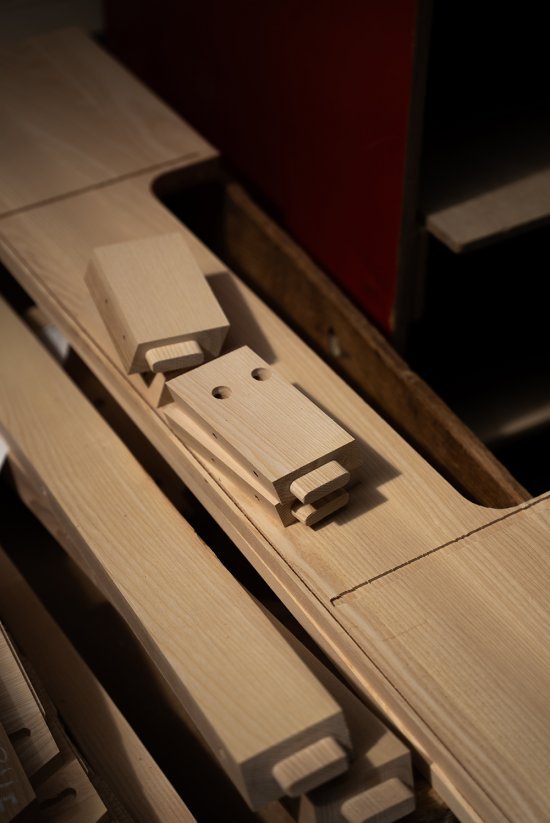
The mortise and tenon joint joins the legs to the top of the Romana Dining Table and is used in many of our designs.
It’s also important to note that there are no screws or other hardware in any of our joints. They're all glued, however, some will also be pegged or wedged for additional strength, particularly table and chair legs which are subject to both direct load and torsional forces. Our craftspeople are particularly fond of wedges. As well as reinforcing the joint, they create a distinctive decorative detail. Because each one takes time and care to fit, our designers are quite particular about where they allow them to appear.
If you would like to keep updated with the latest blogs, new arrivals and the latest offers from ercol, you can sign up to our newsletter here.